
Special Science-Policy Discussion of the Brazilian Limnology Society
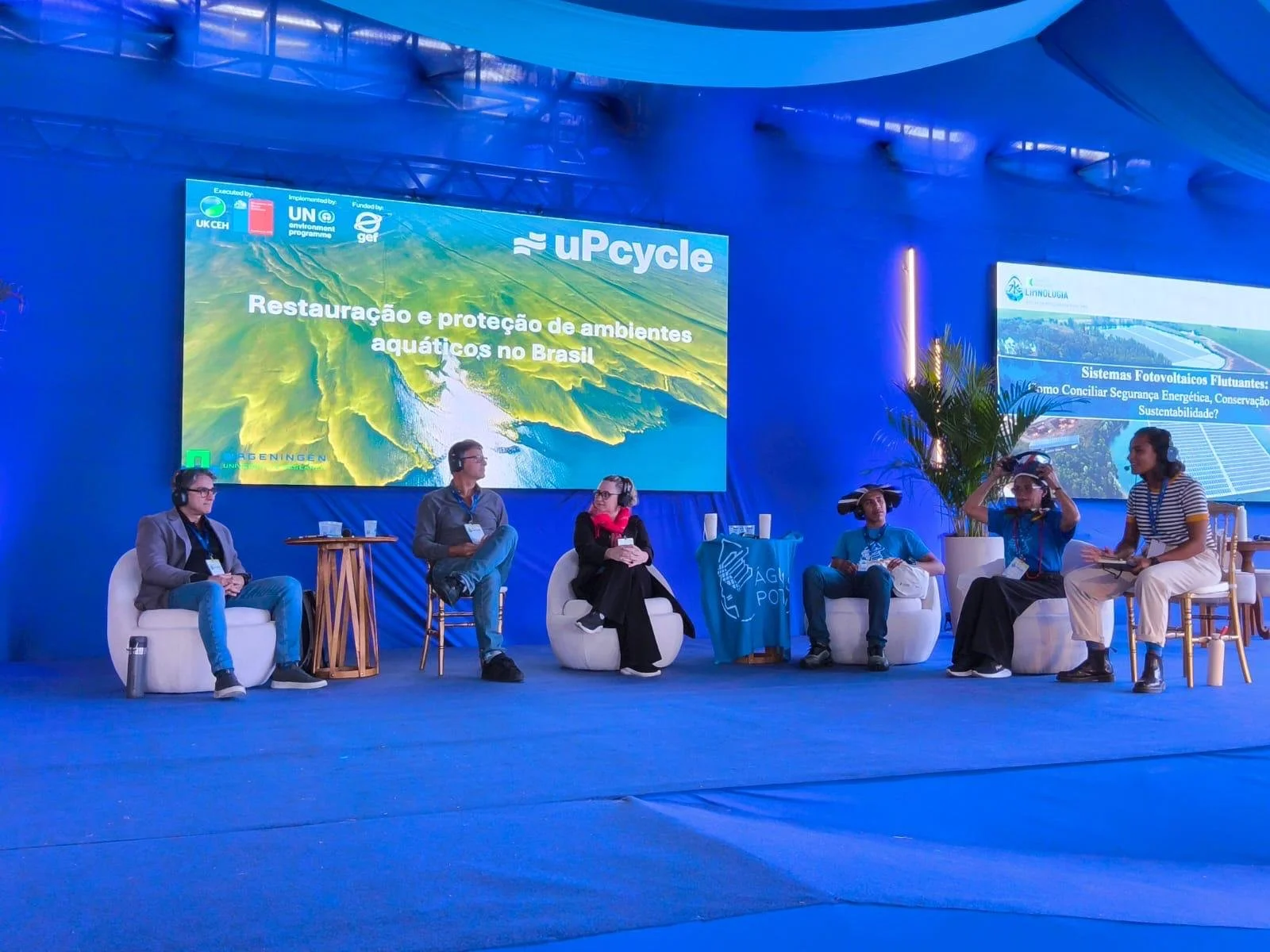
Our colleagues at Wageningen University & Research organised a roundtable discussion at the Brazilian Limnology Conference, bringing together scientists (UERJ and UFRN), government representatives (ANA), and members of Indigenous communities (Águas Potiguaras). The session began with a presentation by Ninha and Matheus from Águas Potiguaras, highlighting their efforts to protect and restore rivers in their territories. The participants, together with the audience, then focused on the practical limitations of restoring and protecting our waters, with particular attention to the tools and solutions that each actor, government, academia, communities, and other institutions, can implement to advance effective conservation and restoration.
Key highlights included the importance of fostering stronger interaction among scientists, the general public, Indigenous communities, and government actors, as well as encouraging their active participation in watershed committees across regions, even when these spaces can be challenging or unwelcoming for some representatives. In Brazil, watershed committees (Comitês de Bacia Hidrográfica) are the main decision-making bodies for water management at the river basin level. They bring together government, water users, and civil society to define priorities, resolve conflicts, and guide conservation and restoration actions. Because they set basin plans and influence how water is used and protected, these committees are often described as “where the action happens,” serving as the primary forums for decisions about the conservation, restoration, and sustainable use of specific water systems.
For those working in water management and affected by water issues, active participation in these committees is essential. However, as discussed during the roundtable, ensuring balanced participation remains a challenge, as groups with fewer financial resources or less institutional influence may face greater barriers to engaging on equal footing with larger, more established stakeholders.